
Farms and farmworkers play an essential role in everyday life. The fruits, vegetables, grains, and dairy products we eat each day all begin on farms across the country. Behind every harvest are farmers and farmworkers who plant, care for, and gather the crops that feed millions of families.
For children, learning about farms is a great way to understand where food comes from and how much work goes into producing it. From planting seeds to harvesting fruits and vegetables, farming requires patience, skill, and teamwork.
Coloring pages are a simple way to introduce younger students to these ideas. As children color pictures of farms, crops, and farmworkers, they can begin to imagine the important work that happens in fields and orchards every day.
Why Farms and Farmworkers Matter
Farms are the foundation of our food system. Farmers manage the land, plant crops, and care for animals, while farmworkers help with many of the day-to-day tasks that keep farms running.
Farmworkers often spend long hours outdoors planting, picking, and packing crops so that food can make its way from the field to grocery stores and family kitchens. Without their work, it would be much harder for communities to access fresh food.
Teaching children about farms helps them develop gratitude for the people who grow and harvest our food.
A Short History of Farmworker Rights
Throughout American history, farmworkers have faced unique challenges. Many farmworkers worked long hours in difficult conditions and were often excluded from some labor protections that applied to other workers.
During the 1960s, farmworkers began organizing to improve working conditions and wages. Leaders like Cesar Chavez, Dolores Huerta, and others helped bring national attention to these issues through peaceful protests, marches, and boycotts.
Their efforts helped raise awareness about the importance of fair treatment for the people who harvest our food. Today, their work continues to inspire conversations about fairness, cooperation, and how communities can work together to solve problems.
Free Farmworker Coloring Pages
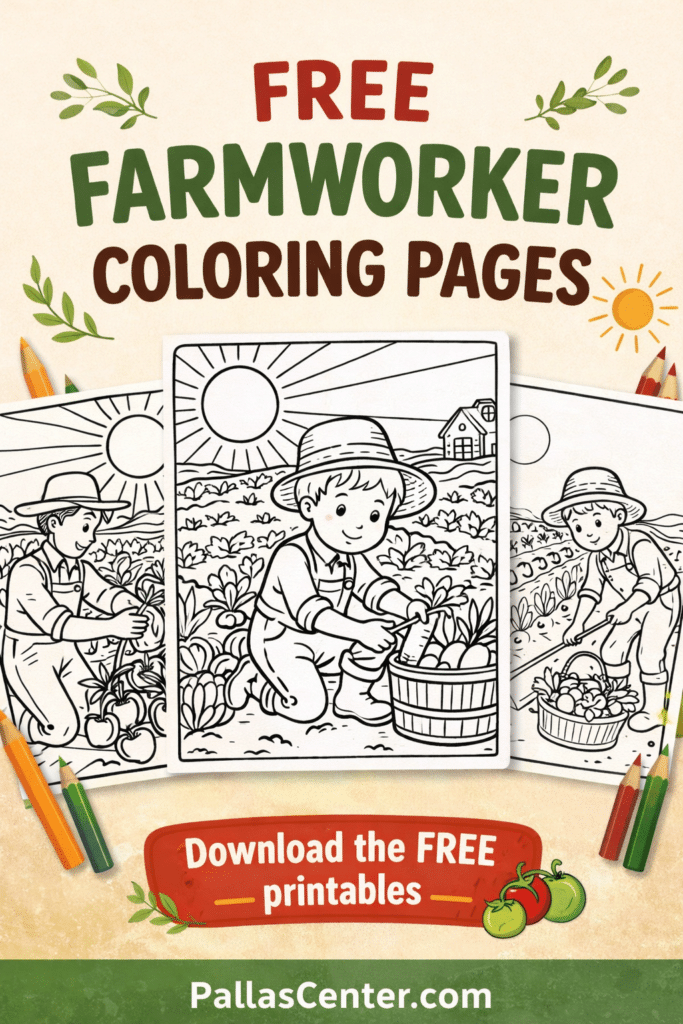
Below you’ll find a set of free farmworker coloring pages that students can enjoy while learning about farms and agriculture.
These pages are perfect for:
- Farm and agriculture units
- Social studies lessons
- Community helpers themes
- Homeschool activities
- Classroom quiet work
Download the free coloring pages below:
Extend the Lesson: Cesar Chavez Unit Study
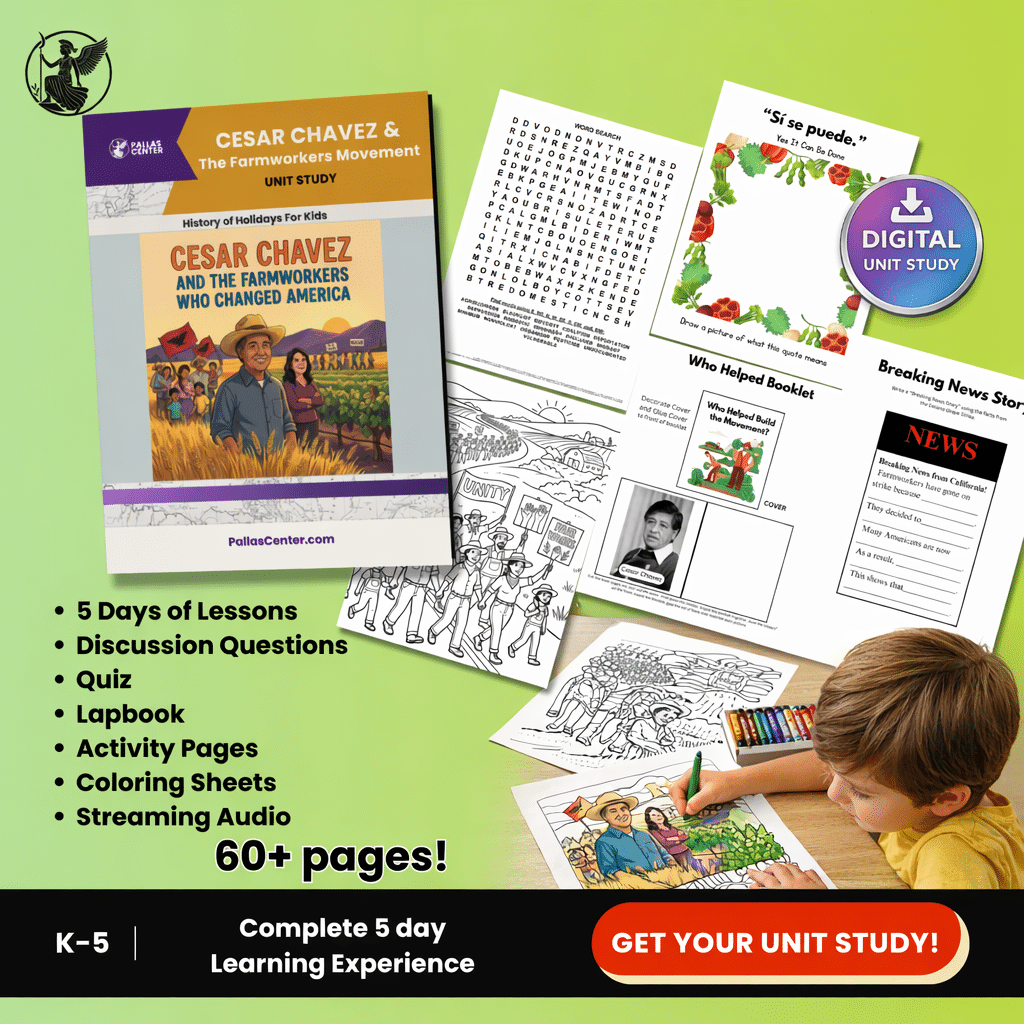
If you’d like to explore the history of farmworkers more deeply with your students, you may enjoy our unit study:
Cesar Chavez and the Farmworkers Who Changed America
This 5-day elementary unit study introduces students to the story of how farmworkers organized peacefully to improve working conditions and bring national attention to their cause.
Students will learn about:
- Why farmworkers were often excluded from labor protections
- The leadership of Cesar Chavez and Dolores Huerta
- The role of strikes, marches, and boycotts
- How ordinary people worked together to create change
The unit includes reading passages, vocabulary, discussion questions, coloring pages, and interactive lapbook activities designed to help students think critically about history.
Helping Kids Connect History to Everyday Life
Learning about farms and farmworkers helps children see how history connects to their everyday lives. The food on their plate didn’t appear by accident—it represents the hard work of many people working together.
By combining hands-on activities like coloring pages with real historical stories, students can develop both curiosity and appreciation for the people who grow and harvest our food.
More Reading:
