
Black history coloring pages can be a great way to introduce kids to big topics like history, justice, and culture. Young children often observe how others are treated, and holidays provide a great way to introduce these topics.
Simple activities—like coloring—can be one of the most effective ways to ease children into meaningful conversations about Black history. Coloring pages give kids something to do with their hands while their minds stay open and engaged. This is especially helpful for younger students who may not be ready for long readings or heavy discussions yet.
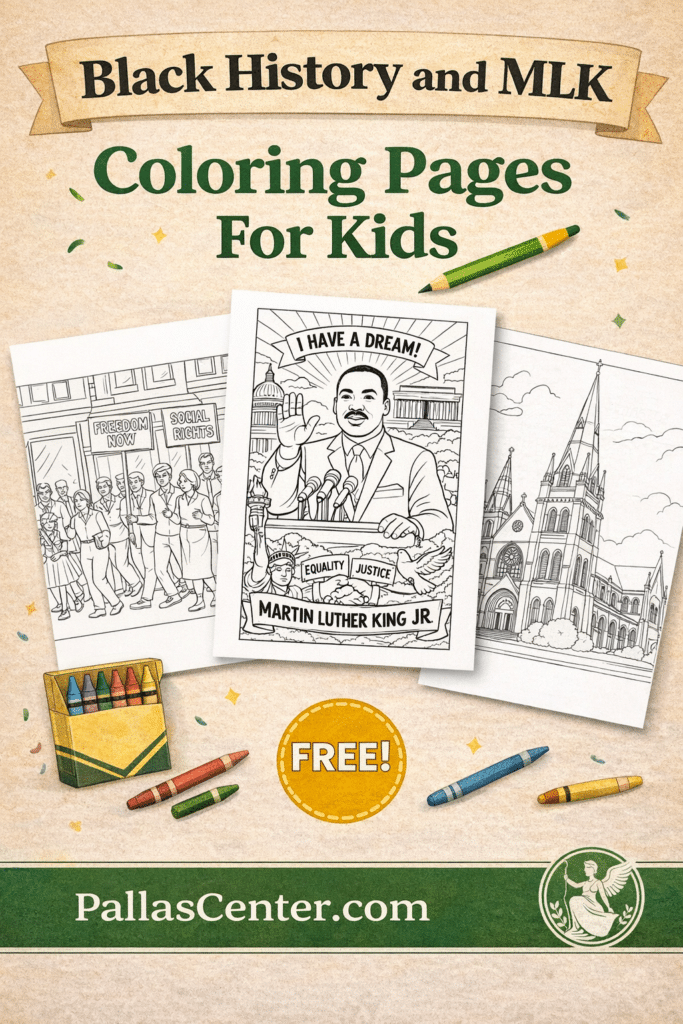
Black history coloring pages work beautifully alongside read-alouds, audiobooks, or short history lessons. As children color, they’re naturally more relaxed and attentive, making it easier for them to listen, absorb ideas, and ask thoughtful questions. It’s a low-pressure way to introduce important people, events, and themes without overwhelming them.
These kinds of activities are also ideal for multi-age families. Younger kids can color while older siblings listen to the same lesson and engage at a deeper level. Everyone is included, just at their own pace.
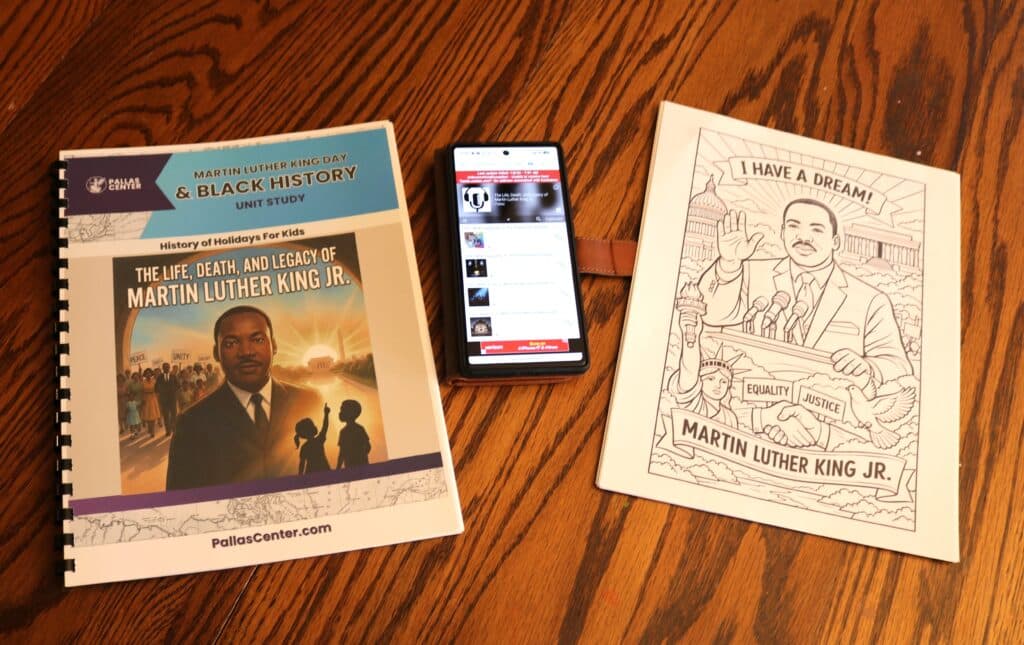
At Pallas Center, we often recommend pairing coloring pages with audio learning—especially during holiday history lessons. For example, our unit study on Martin Luther King Jr. includes audio versions of each lesson, making it easy for children to color while listening to the story of Dr. King’s life, leadership, and legacy. This combination keeps learning calm, focused, and surprisingly effective.
Black history doesn’t need to start with long worksheets or complex assignments. Sometimes, a box of crayons, a good story, and a few quiet minutes are the perfect place to begin.
More Reading:
